Chiang Mai · Planning
Best time for team building in Chiang Mai
The short answer is November to February. That is the stretch with the most reliable outdoor conditions, cooler nights and the lowest chance of haze. The rest of the year still works — we just design the day differently.
For a facilitated team day the calendar matters more than it does for pure tourism. Outdoor modules need decent air and a fair chance of staying dry. Strategy and communication work often lands better indoors anyway. The question is which default makes sense for the dates you actually have.
Check a month
Tap a month for a quick read on outdoor suitability, air quality risk and rain. These are long-term patterns, not a forecast for a specific week.
Select a month
Outdoor, air quality and rain notes will appear here.
Cool and dry (November–February)
This is the window most corporate groups aim for. Days are warm but not punishing, nights are cool, and rain is rare. Outdoor modules, villa gardens and short walks between spaces all work without constant weather contingency.
December and January sit at the top of demand. Villas and the better hotels fill earlier, so lead times stretch. November and late February are often a bit quieter while still giving strong conditions.
Live air-quality readings are published by Chiang Mai University’s Climate Change Data Center. Even in the cool season it is worth a quick check the week of the event.
Hot and haze risk (March–April)
March and April bring the burning season. Smoke from agricultural and forest fires can push air quality into the unhealthy range for days at a time. Temperatures also climb. Outdoor physical work becomes less comfortable and less useful.
We treat these months as indoor-first. Hotel meeting rooms, villa living spaces and ballrooms are the default. The same facilitation approach applies — pairs and small groups, clear native English, no forced solo spotlight. Details sit in the indoor team building in Chiang Mai post. For station-level monthly patterns across the north, see the haze-season data compiled by From Thailand.
Green season (May–October)
Rains return, usually as short heavy afternoon showers rather than all-day grey. August and September are the wettest on average. The upside is clearer air after the haze months, greener hills, and fewer visitors.
We still run outdoor modules when the forecast looks reasonable, but every booking carries a ready indoor path. Moving a group inside takes minutes if the design anticipates it. For the wider comparison of destinations, see Chiang Mai vs Bangkok vs Phuket.
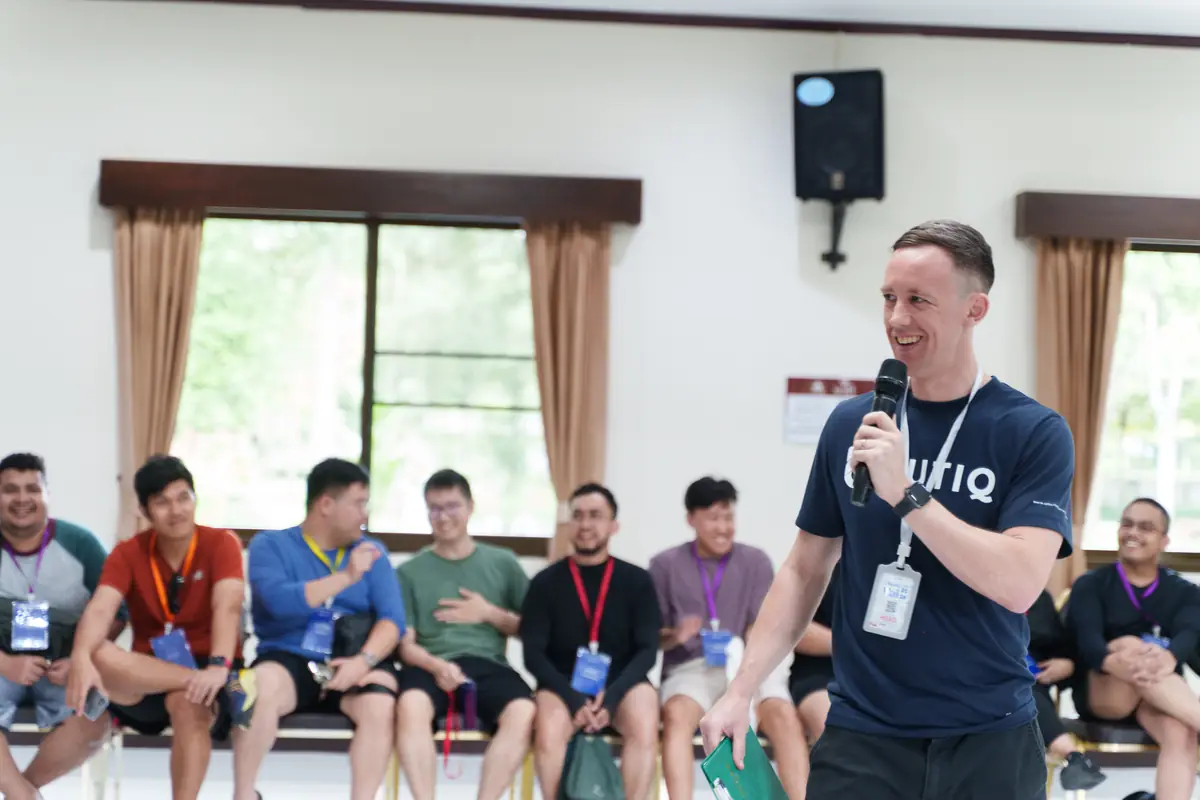
What we actually do when conditions are imperfect
We do not cancel. We design the day so weather is a variable, not a single point of failure.
- Every proposal includes an indoor alternative that uses the same goals and similar energy.
- On the day we check the forecast and, in haze season, the live AQI before deciding the final split between indoor and outdoor.
- Larger groups get parallel stations so nobody sits out if space is tighter inside.
This is the same approach we use year-round on the main Chiang Mai team building page. Singapore-routing teams often ask the same question when locking dates — the two posts on Chiang Mai from Singapore and Phuket from Singapore cover the short-haul angle.